The Fayth

A living archive in motion

The frame changes with the day. The center keeps your record intact.

Syllabus

Memory Consolidation With HSAM

The real syllabus source is now the Google Doc "Memory Consolidation With HSAM," by Joseph Kropf with edits by Faith Cheltenham/X. It explores how attention, recognition, emotion, patterning, and points of reference can deepen autobiographical memory and hyperthymestic recall.

  • The site syllabus now follows the actual document structure instead of a placeholder curriculum.
  • The board can use these sections as thread prompts for memory activation, pattern recognition, and lived recall.

Study-led microsite direction

A memory lab for focused reading, retrieval, and visible practice.

This syllabus now reads as a real study surface first: source-backed, module-led, and designed to turn memory work into outputs that can be seen, checked, and threaded back into the board.

4 core modules
5 practice methods
1 source doc anchor
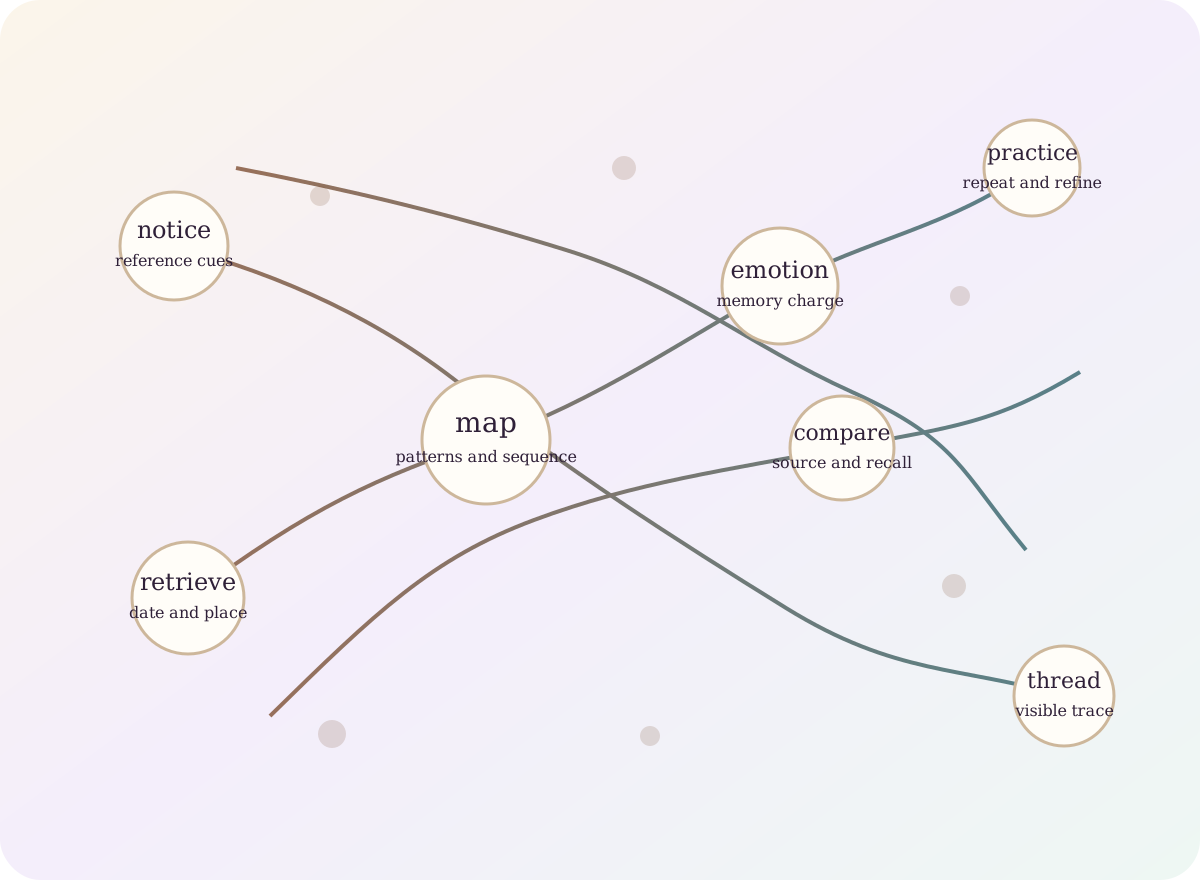
Abstract memory atlas showing recall nodes, study routes, and thread links.

Curriculum core

The syllabus follows the actual document, then turns it into practice.

By Joseph Kropf. Edits by Faith Cheltenham/X. Updated September 5, 2022.

Source document pulled from the shared Google Drive folder "_Hyperthymesia_Syllabus_2022 by Faith Cheltenham, X."

Study-led Forum-linked Memory consolidation

Section 01

How Accessing Normally Unconscious Memory Storehouses Of The Brain May Occur

Explores how shared brain functions, attention, emotion, planning, recognition, and background processing may combine to make autobiographical memory more lucid and accessible.

Deliverable: Open a thread about one mechanism that seems to match your lived recall and test it against your own memory patterns.

Section 02

Other Types Of Attention Activating Autobiographical Memory

Looks at how repeated activation, environmental cues, recognition, comparison, metaphor, and synthesis can wake up memory traces that usually stay in the background.

Deliverable: Write one thread about a comparison, pattern, or metaphor that unlocked a memory you did not expect to surface.

Section 03

Ways HSAMers Can Channel Attention

Frames HSAM not just as recall, but as something that can be directed through habits of attention, conceptual thinking, and choices about what kind of information the mind treats as important.

Deliverable: Create a thread about one attention habit you want to strengthen or redirect in your own recall practice.

Section 04

Memory Activation Points of Reference: Tapestry of Life vs Abstract

Distinguishes between memory rooted in direct lived scenes and memory activated through abstract structures like patterns, meanings, categories, timelines, systems, and concepts.

Deliverable: Start one tapestry-of-life thread and one abstract-pattern thread, then compare what each style reveals.
Study outputs

A good session leaves evidence behind.

  • one short retrieval note tied to a date, place, or reference point
  • one comparison between memory and source material
  • one thread or forum post that turns study into visible practice

Approved reuse

Thefayth atmosphere can support the syllabus without taking it over.

  • editorial page framing and archive textures are allowed
  • memory-map motifs and thread-link styling are allowed
  • hub hero compositions and campaign visuals should stay out

Learning rhythm

Use the syllabus as a sequence, not a static reading pile.

  1. Read one module from the source document.
  2. Pick one memory protocol and test it immediately.
  3. Publish one clear trace to the forum or study log.